

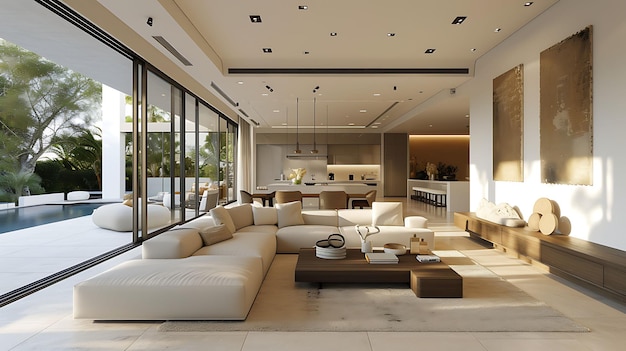
Konsep “less is more” (lebih sedikit lebih baik) telah melampaui asal-usulnya sebagai gerakan arsitektur khusus untuk menjadi estetika yang menentukan abad ke-21. Di era yang ditandai dengan kebisingan digital, kelebihan rangsangan sensorik, dan laju kehidupan perkotaan yang tak henti-hentinya, estetika desain interior minimalis menawarkan tempat perlindungan yang tenang dan jernih. Jauh dari gaya yang “dingin” atau “kosong”, minimalisme modern berfokus pada kurasi ruang yang disengaja, di mana setiap elemen memiliki tujuan fungsional atau emosional. Pergeseran ini bukan hanya tentang estetika; ini adalah gerakan gaya hidup mendalam yang memprioritaskan kesejahteraan mental, keberlanjutan, dan kualitas pengerjaan yang tinggi. Saat kita memasuki tahun 2025, minimalisme terus mendominasi tren interior global, berevolusi menjadi iterasi yang lebih hangat dan lebih nyaman seperti Japandi dan Minimalisme Organik
Analisis komprehensif ini mengeksplorasi dasar-dasar psikologis, historis, dan praktis mengapa minimalisme tetap menjadi standar emas untuk rumah kontemporer. Kita akan mengupas prinsip-prinsip inti perencanaan ruang, peran cahaya alami, integrasi teknologi pintar, dan memberikan panduan ruangan demi ruangan untuk mencapai tingkat ketenangan rumah tangga yang luar biasa.
Evolusi Sejarah Ruang Minimalis
Minimalisme tidak muncul begitu saja. Ia merupakan hasil evolusi pemikiran desain selama berabad-abad yang berupaya menyingkirkan hal-hal yang berlebihan dan mengutamakan hal-hal yang esensial.
1. Dasar-Dasar Pemikiran Minimalis
-
Filosofi Zen Jepang: Akar minimalisme modern dapat ditelusuri kembali ke estetika tradisional Jepang, khususnya konsep Ma (keindahan ruang kosong). Filosofi ini menghargai kesederhanaan, kealamian, dan apresiasi terhadap ketidaksempurnaan ( Wabi-Sabi ).
-
Gerakan Bauhaus: Pada awal abad ke-20, sekolah Bauhaus di Jerman merevolusi desain dengan menekankan bahwa “bentuk mengikuti fungsi.” Arsitek seperti Ludwig Mies van der Rohe memperjuangkan gagasan bahwa kejelasan struktural dan efisiensi industri adalah tolok ukur keindahan yang baru.
-
Arsitektur Modernis: Arsitektur pasca Perang Dunia II menggunakan baja, kaca, dan beton untuk menciptakan denah lantai terbuka. Hal ini menghilangkan ruangan-ruangan era Victoria yang “berantakan” dan menggantinya dengan ruang-ruang yang mengalir dan dipenuhi cahaya.
Psikologi Hidup Minimalis
Dominasi minimalisme sebagian besar didorong oleh dampaknya yang terukur pada psikologi manusia. Penelitian dalam neuro-arsitektur menunjukkan bahwa lingkungan yang berantakan meningkatkan kadar kortisol (hormon stres), sedangkan lingkungan yang terorganisir dan jarang barang justru meningkatkan fokus kognitif.
1. Kejernihan Visual dan Ketenangan Mental
-
Reduction of Choice Fatigue: By limiting the number of objects in a room, the brain has fewer visual stimuli to process, allowing for deeper relaxation and reduced anxiety.
-
The Focus on High-Quality Materials: Minimalist interiors often use “honest” materials like raw wood, stone, and linen. These textures provide a tactile connection to nature, which is proven to lower heart rates and improve mood.
-
Intentionality and Mindfulness: Living in a minimalist space requires a constant practice of mindfulness. Owners must decide which items are truly valuable, fostering a deeper appreciation for the things they choose to keep.
Core Principles of Minimalist Interior Design
To master the minimalist aesthetic, one must adhere to a set of disciplined design principles that balance empty space with functional beauty.
1. Mastering Space and Proportion
Designers often use mathematical ratios to ensure a room feels balanced without being cluttered. The Golden Ratio ($\phi$) is frequently applied to the placement of furniture and windows to create a natural sense of harmony:$$\phi = \frac{1 + \sqrt{5}}{2} \approx 1.618$$
-
Negative Space as a Feature: In minimalism, the “empty” wall or floor is as important as the furniture. Negative space provides a visual “breather,” allowing the eye to rest.
-
The Rule of Thirds: Similar to photography, placing key furniture pieces off-center according to a 3×3 grid can make a room feel more dynamic and less static.
-
Circulation Paths: A minimalist home prioritizes movement. Furniture is arranged to create clear, unobstructed paths, emphasizing the architectural flow of the building.
2. Lighting: The Invisible Material
Light is the most critical component of a minimalist interior. Without proper lighting, a minimalist room can feel stark or depressing.
-
Maximizing Natural Light: Large, unadorned windows allow sunlight to define the textures of the room. Natural light changes throughout the day, providing a “living” element to the walls.
-
Layered Artificial Lighting: Instead of a single overhead light, minimalist design uses layers:
-
Ambient Lighting: Soft, diffused light that fills the room.
-
Task Lighting: Focused light for reading or cooking.
-
Accent Lighting: Subtle LEDs used to highlight architectural features or a single piece of art.
-
-
Hidden Light Sources: Recessed lighting and “cove” lighting are used to hide the fixtures themselves, allowing only the glow to be visible.
The Rise of “Warm Minimalism” and Japandi
The latest evolution of this aesthetic has moved away from the “all-white, sterile” look of the 2010s. Modern minimalism is tactile, cozy, and culturally blended.
1. Defining Japandi Style
Japandi is the fusion of Japanese functionalism and Scandinavian rusticism (Hygge). It is currently the most popular sub-trend in interior design.
-
Contrasting Tones: Japandi uses the light, airy woods of Scandinavia (ash, pine) contrasted with the dark, charcoal tones of Japanese design (burnt cedar, black metal).
-
Functional Art: Every decorative piece in a Japandi home must have a use—for example, a beautiful ceramic teapot or a handcrafted wooden stool.
-
Bringing the Outdoors In: The use of indoor plants (Bonsai or Olive trees) is essential to bridge the gap between the built environment and nature.
2. Organic Minimalism
This style focuses on curved lines and natural materials to soften the edges of modern architecture.
-
Biomorphic Shapes: Instead of sharp rectangles, Organic Minimalism uses kidney-shaped coffee tables and arched doorways.
-
Earth Tones: The palette shifts from “stark white” to “greige,” “sand,” “terracotta,” and “sage green.”
-
Textural Depth: Bouclé fabrics, jute rugs, and lime-wash walls provide visual interest without needing patterns or colors.
Room-by-Room Guide to Minimalist Transformation
Achieving a minimalist home requires a systematic approach to decluttering and curation. Here is how to apply the aesthetic across different zones.
1. The Minimalist Living Room: The Social Sanctuary
-
The Anchor Piece: Choose one high-quality sofa with clean lines and no skirt. The legs should be visible to create a sense of more floor space.
-
Hidden Storage: Use sleek, handle-less cabinetry to hide media equipment and cables. Cables are the enemy of minimalist visual peace.
-
Curation of Art: Instead of a gallery wall, choose one oversized piece of art that reflects the room’s color palette.
2. The Minimalist Kitchen: The Functional Lab
-
Clear Countertops: Every appliance should have a dedicated spot inside a cabinet. Only the most beautiful or daily-use items (like a designer kettle) should remain visible.
-
Integrated Appliances: Use cabinetry panels to hide the refrigerator and dishwasher, creating a seamless, architectural look.
-
Material Consistency: Use the same material for the countertop and the backsplash (a “waterfall” effect) to reduce visual transitions.
3. The Minimalist Bedroom: The Sleep Engine
-
Low-Profile Beds: Platform beds inspired by Japanese futons help the ceiling feel higher and the room more grounded.
-
Symmetrical Balance: Use matching bedside tables with minimal clutter to create a sense of order.
-
Soft Textures: Use layers of natural linen in monochromatic tones to add warmth without visual noise.
 Sustainable Minimalism: Quality Over Quantity
Minimalism is inherently eco-friendly. By rejecting fast-furniture and “throwaway” culture, minimalist design promotes a more sustainable way of living.
1. Investing in “Forever” Furniture
-
Solid Wood Construction: Unlike particle-board furniture, solid oak or walnut pieces can be sanded and refinished for decades.
-
Local Craftsmanship: Minimalists often prioritize buying from local artisans, reducing the carbon footprint associated with global shipping.
-
Timelessness: By avoiding “trendy” patterns or colors, minimalist homes don’t need to be renovated every five years, saving tons of construction waste.
2. Smart Technology and Minimalism
Technology is often the cause of clutter, but “Smart Home” tech can actually assist the minimalist aesthetic.
-
Invisible Audio: In-wall and in-ceiling speakers provide high-fidelity sound without the need for bulky floor speakers.
-
Smart Blinds: Automated window treatments can be programmed to follow the sun’s path, optimizing natural light without the need for heavy curtains.
-
Unified Controls: Using a single tablet or voice control to manage lighting, climate, and security removes the need for multiple switches and panels on walls.
Challenges in Minimalist Design and How to Overcome Them
Living in a minimalist home isn’t always easy. It requires discipline and a change in habits.
1. The Problem of Maintenance
-
Dust Visibility: Clean lines and empty surfaces show dust more easily. Solution: Integrated air purification systems and robot vacuums that can navigate open floor plans efficiently.
-
The “Accumulation” Habit: Items naturally flow into a home. Solution: The “One-In, One-Out” rule. For every new item purchased, one old item must be donated or recycled.
-
The Lack of Personality: Some fear minimalism feels impersonal. Solution: Personalize through texture and smell (candles, incense) rather than visual objects.
The Financial Benefits of the Minimalist Aesthetic
Beyond the mental and environmental perks, minimalism is a sound financial strategy for homeowners and investors.
1. Resale Value and Market Appeal
-
Broad Appeal: Minimalist interiors act as a “blank canvas,” allowing potential buyers to visualize their own lives in the space. This often leads to faster sales and higher closing prices.
-
Durability: Because the focus is on high-quality materials, the interior doesn’t “wear out” as quickly as homes with cheaper, trendy finishes.
-
Mengurangi Biaya Renovasi: Ruang minimalis yang dirancang dengan baik bersifat abadi. Uang yang dihemat dari pembaruan dekorasi yang sering dapat dialihkan ke aset atau pengalaman yang berkinerja lebih tinggi.
 Kesimpulan: Minimalisme sebagai Arsitektur Masa Depan
Dominasi estetika minimalis dalam desain interior bukanlah tren sesaat; ini adalah respons terhadap kompleksitas dunia modern. Dengan menyingkirkan hal-hal yang tidak penting, kita memberi ruang bagi hal-hal yang benar-benar penting: cahaya, udara, kualitas, dan kedamaian. Baik diekspresikan melalui kehangatan pedesaan Japandi atau ketelitian struktural Bauhaus , minimalisme menyediakan kerangka kerja untuk kehidupan yang lebih terencana dan berkelanjutan. Seiring kota-kota kita menjadi lebih padat dan kehidupan digital kita semakin berantakan, rumah minimalis akan tetap menjadi kemewahan tertinggi—tempat perlindungan yang tenang, indah, dan fungsional di mana jiwa dapat menemukan kedamaian. Masa depan desain bukanlah tentang memiliki lebih banyak; ini tentang menjadi lebih baik dengan lebih sedikit.

