
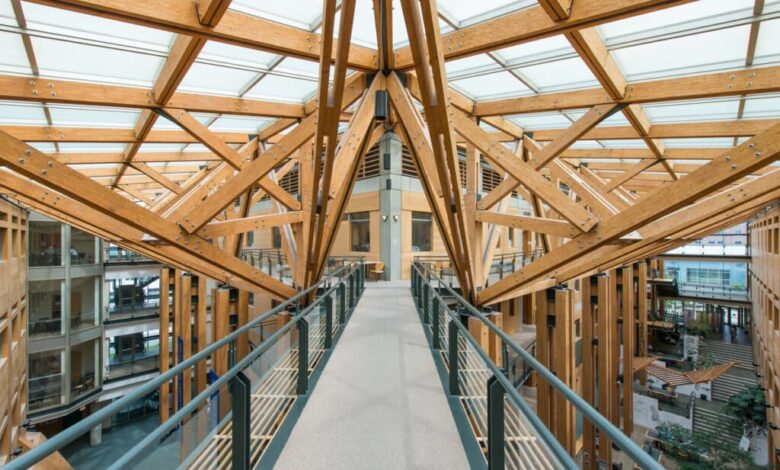
The global construction industry is at a pivotal inflection point, moving rapidly away from carbon-intensive materials like concrete and steel toward sustainable, renewable alternatives.
At the forefront of this revolution is Mass Timber, a class of engineered wood products that includes Cross-Laminated Timber (CLT) and Glued-Laminated Timber (Glulam).
Once seen as a niche or low-rise solution, mass timber is now the material of choice for ambitious, high-rise, and architecturally significant structures worldwide.
The overwhelming trend of mass timber buildings not only meeting but winning the highest international design and sustainability awards confirms wood’s re-emergence as the premier material for the future of construction.
These accolades are driven by wood’s unique ability to address both the aesthetic desires of modern architecture and the urgent climate imperatives of the 21st century.
This extensive guide delves into the technical and ecological supremacy of mass timber, analyzes the specific reasons why these structures are garnering top industry recognition, explores the profound impact on building performance and human health, and charts the market shift toward a globally timber-centric construction economy.
The Technical Triumph of Mass Timber Technology
The foundational reason for mass timber’s success in high-profile projects is the sophisticated engineering that allows it to compete with—and often surpass—traditional heavy materials.



1. Defining Mass Timber Components
Mass timber refers to structural wood products made by binding smaller wood elements into large, load-bearing components.
A. Cross-Laminated Timber (CLT)
This product is made by layering lumber boards, alternating the direction of the grain in each layer, and bonding them with structural adhesive.
The resulting panel is incredibly strong, dimensionally stable, and suitable for use as walls, floors, and roofs in large buildings.
Its strength comes from the cross-directional layering, which resists warping and provides bi-directional load-bearing capacity.
B. Glued-Laminated Timber (Glulam)
Glulam is created by bonding layers of dimensional lumber with durable, moisture-resistant structural adhesives, with the grain running parallel.
It is primarily used for long spans, curved arches, and columns where high load-bearing capacity and aesthetic appeal are required. Glulam allows architects to achieve shapes and lengths impossible with natural lumber.
C. Laminated Veneer Lumber (LVL)
This product uses thin wood veneers laid parallel to the long direction and bonded under heat and pressure.
LVL is often used for beams, headers, and rim boards, offering high strength-to-weight ratios and predictability.
2. Structural and Construction Advantages
Mass timber provides inherent benefits that simplify construction, improve project timelines, and enhance structural integrity.
A. Speed and Precision of Construction
Mass timber components are manufactured off-site using Computer Numerical Control (CNC) technology to ensure near-perfect dimensional accuracy.
They arrive at the site ready for assembly, similar to large-scale furniture. This “dry construction” process is significantly faster than concrete casting, reducing overall project timelines by up to 25%.
B. High Strength-to-Weight Ratio
Timber, especially CLT, is remarkably light yet strong. It is approximately one-fifth the weight of concrete yet offers comparable strength.
This reduced weight lowers the demand on the foundation and often allows for construction on sites where heavy concrete structures would be logistically or technically challenging.
C. Seismic Performance
Due to its light weight and ductile connections, mass timber structures have demonstrated exceptional performance in seismic testing.
The inherent flexibility and ability to absorb energy make timber buildings highly resilient in earthquake-prone regions, a feature greatly valued by structural engineers.
Ecological Supremacy: The Carbon Narrative
The most compelling argument for mass timber, and the reason it dominates sustainability awards, lies in its ability to address the urgent climate crisis caused by the construction sector.
1. Embodied Carbon Reduction
The embodied carbon—the carbon emissions generated during the manufacturing and transportation of building materials—is the core battleground for sustainable construction.
A. Carbon Sequestration
Trees absorb massive amounts of carbon dioxide () from the atmosphere during their growth via photosynthesis.
When that wood is processed into mass timber and locked into a building structure, the carbon remains sequestered for the life of the building. A single cubic meter of CLT sequesters approximately one ton of .
B. Lower Manufacturing Emissions
The production of mass timber requires significantly less energy compared to the creation of traditional materials.
Cement production is responsible for around 8% of global emissions, and steel production also requires vast amounts of heat. In contrast, mass timber fabrication is a far less energy-intensive, low-carbon process.
C. Renewability
Unlike steel or concrete aggregates, wood is a renewable resource. When sourced from sustainably managed forests (certified by organizations like FSC or PEFC), the process involves responsible harvesting and mandatory replanting, creating a continuous carbon sink.
2. Operational Carbon Benefits
Beyond the embodied carbon of the material itself, timber contributes to reducing the building’s energy consumption over its operational life.
A. Superior Thermal Performance
Wood is a natural insulator. The thick panels of CLT have better inherent thermal performance than concrete, reducing the need for extensive insulation and contributing to lower energy consumption for heating and cooling.
B. Reduced Thermal Bridging
The continuous nature of mass timber structural elements minimizes thermal bridging (paths of heat loss), which is common in steel-framed construction, thus enhancing the building envelope’s efficiency.
C. Deconstruction and Circularity
At the end of a mass timber building’s life, its components can potentially be deconstructed and reused in another building, or responsibly repurposed, supporting a truly circular economy model, unlike concrete rubble which often ends up in landfills.
 Performance Excellence: Fire, Safety, and Biophilia
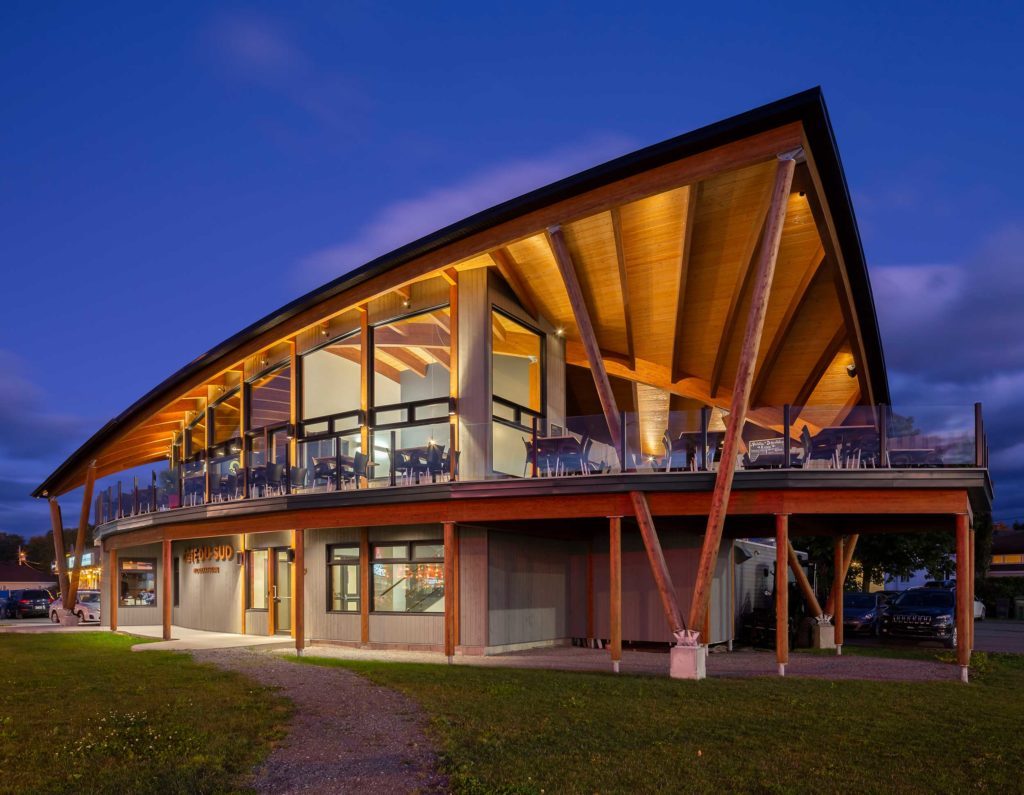
Mass timber buildings are winning design awards not just for their green credentials, but because they provide superior safety, performance, and aesthetic qualities.
1. Enhanced Fire Safety (The Charring Effect)
Addressing initial public skepticism about fire risk, mass timber has proven to be an exceptionally safe material in fire conditions.
A. Predictable Charring
Unlike steel, which loses structural integrity when it rapidly buckles at high temperatures, mass timber panels are designed to char predictably when exposed to fire.
The charred outer layer acts as an insulating barrier, protecting the structural core of the wood beneath and allowing the structure to maintain its load-bearing capacity for designated fire-resistance periods.
B. Acoustic Performance
The mass and layering of CLT panels provide superior acoustic dampening compared to typical lightweight wood framing or thin concrete slabs, leading to quieter, more comfortable interior spaces that enhance user well-being.
C. Reduced Moisture Risk
The dry, prefabricated nature of mass timber construction minimizes the moisture content during the construction phase, reducing the risk of mold, mildew, and potential long-term structural issues often associated with pouring and curing concrete.
2. Biophilic Design and Human Well-being
Architectural juries are increasingly rewarding designs that connect occupants with nature, a concept known as biophilia, which timber naturally facilitates.
A. Aesthetic Warmth and Connection
Exposing the natural wood surface inside a building creates a warm, visually appealing aesthetic that is impossible to replicate with concrete. Studies show that occupants of mass timber buildings report higher levels of satisfaction and comfort.
B. Physiological Benefits
Research indicates that the presence of exposed wood surfaces can have measurable physiological benefits, including reducing occupants’ stress levels and lowering heart rates, essentially creating a healthier, more calming internal environment.
C. Natural Material Appeal
The preference for timber aligns with a global trend toward natural, non-toxic building materials, supporting a holistic approach to building health (often referred to as the “wellness building” concept).
Market Impact and Future Trajectory
The success of award-winning mass timber projects is driving profound changes in building codes, investment strategies, and global manufacturing capacity.
1. Evolving Building Codes and Height Limits
The proven safety and structural integrity of mass timber have compelled regulatory bodies to update long-standing rules.
A. International Code Council (ICC) Changes
The ICC, which governs US building codes, has made landmark changes to allow for mass timber structures up to 18 stories (up from just six) in specific classifications.
This legislative change has unlocked the potential for timber high-rises.
B. Global Adoption
Cities and nations worldwide, particularly in Northern Europe (Scandinavia, Germany) and Canada, are actively promoting and funding mass timber development, often incentivizing the use of local, sustainable wood products to stimulate a green economy.
C. The “Tallwood” Movement
The race to build the tallest timber skyscraper serves as a crucial proof-of-concept, pushing the boundaries of engineering and design and inspiring confidence in the material’s viability for large, complex structures.
2. Supply Chain and Manufacturing Expansion
The massive shift in demand is spurring global investment in new, high-tech wood processing facilities.
A. Decentralized Manufacturing
Unlike steel and cement, which require enormous, centralized plants, mass timber production facilities can be more strategically decentralized, creating local jobs and shortening supply chains, reducing transportation emissions.
B. Integrated Forestry Management
The reliance on mass timber strengthens the economic viability of certified, sustainable forestry, encouraging forest owners to manage their resources for long-term health and carbon sequestration, acting as a crucial tool for climate mitigation.
C. Standardization and Efficiency
Increased demand is driving the standardization of CLT and Glulam panel sizes and connections, leading to greater economies of scale and reducing the final cost of the material, making it more competitive with concrete.
3. Financial and Insurance Confidence
Initially hesitant, the financial and insurance industries are now fully embracing mass timber as a stable, low-risk asset class.
A. Lower Insurance Premiums
As data on fire safety and seismic resilience has accumulated, insurance companies are becoming more comfortable with mass timber, leading to more favorable rates, particularly when coupled with robust fire suppression systems.
B. Green Financing Incentives
Banks and investors are increasingly offering lower interest rates or specialized financing (green bonds) for buildings that meet high sustainability standards, creating a strong financial incentive for developers to choose mass timber.
C. Faster Time-to-Market
The accelerated construction timeline inherent to mass timber reduces the period during which a project is capitalized but not generating revenue, improving financial metrics and appealing to investors focused on rapid returns.
 Conclusion
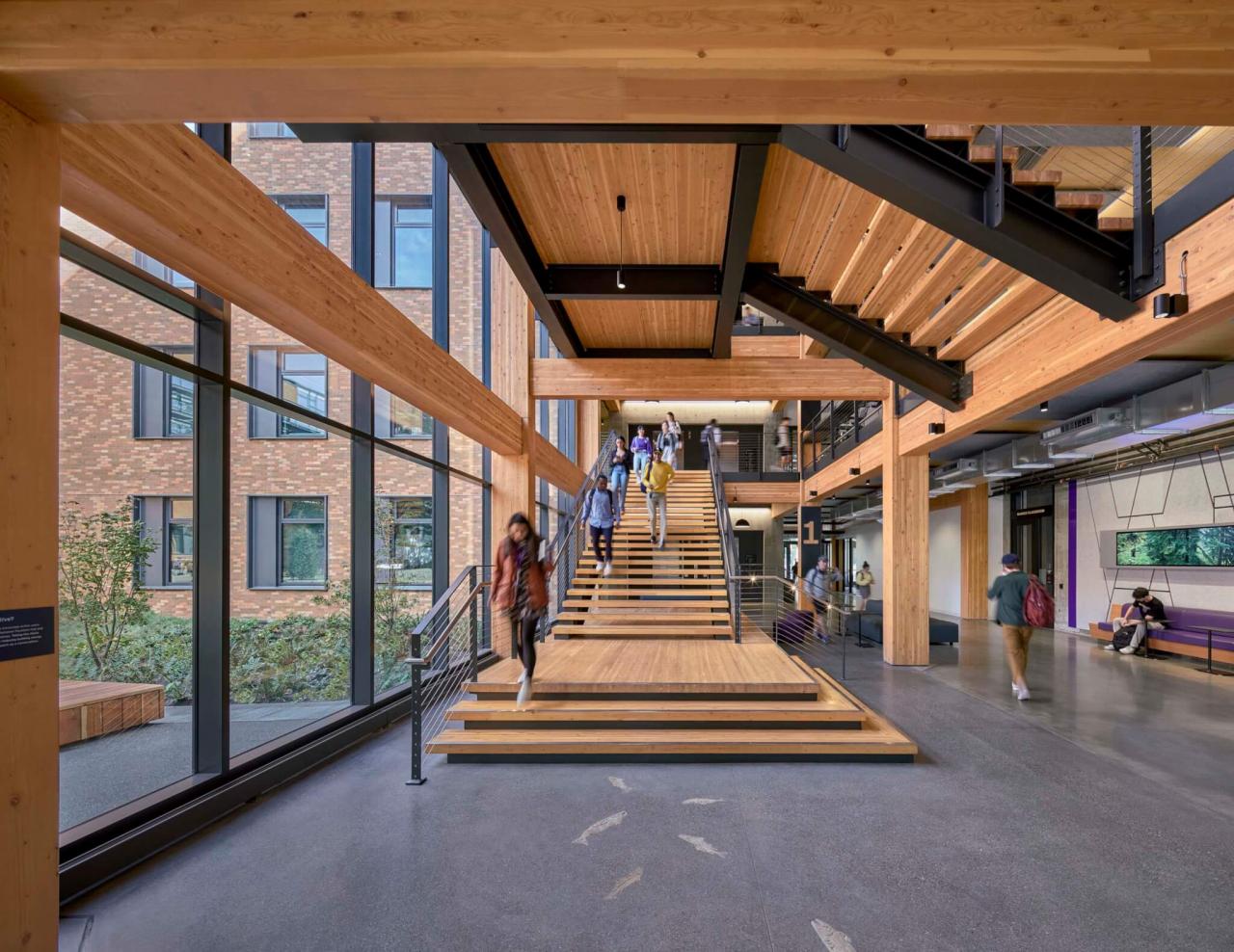
The accolades pouring in for mass timber architecture signal an undeniable shift: wood is now recognized as a premier, high-performance, and future-proof building material.
The days of mass timber being merely a green alternative are over; it is now the standard for excellence in both sustainability and structural innovation.
By offering unparalleled carbon sequestration, rapid precision construction, superior occupant well-being, and proven safety features, mass timber structures are solving the most pressing challenges facing the global construction sector.
These award-winning buildings serve as iconic proof that the sustainable choice is also the superior aesthetic, technical, and economic choice, ushering in a new era of architecture defined by the natural elegance and ecological power of wood. The future of the built environment is inherently wooden.

