
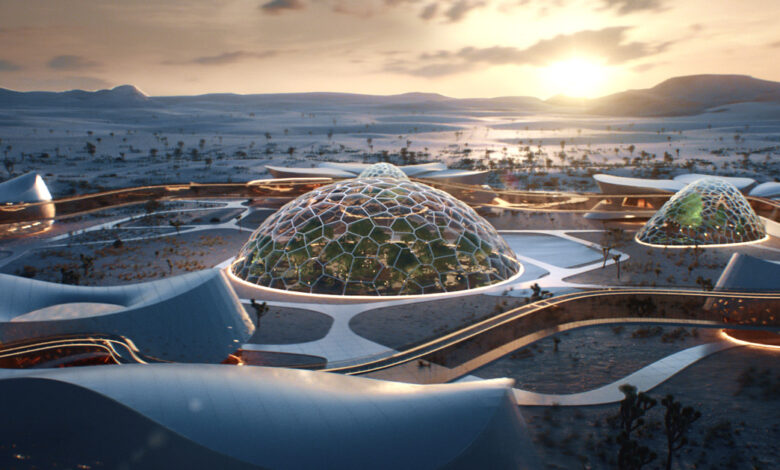
Perbatasan terakhir bukan lagi sekadar tujuan eksplorasi; ia telah menjadi laboratorium utama untuk inovasi terestrial. Saat umat manusia menghadapi krisis iklim global, kelangkaan sumber daya, dan urbanisasi yang cepat, kendala ketat dalam desain habitat luar angkasa memberikan cetak biru untuk masa depan kehidupan berkelanjutan di planet kita. Arsitektur luar angkasa, karena kebutuhan, harus memecahkan versi paling ekstrem dari masalah yang kita hadapi di Bumi: sirkularitas sumber daya total, efisiensi energi radikal, dan kesehatan psikologis penghuni di ruang terbatas. Saat ini, teknologi yang dikembangkan untuk menopang kehidupan di Bulan atau Mars sedang “diturunkan” untuk mengubah cara kita mendesain, membangun, dan menghuni kota-kota kita. Konvergensi teknik kedirgantaraan dan arsitektur sipil ini memunculkan era baru desain biofilik, berkinerja tinggi, dan regeneratif
Analisis mendalam ini akan mengeksplorasi transfer teknologi yang signifikan antara habitat luar angkasa dan arsitektur di Bumi, dengan fokus pada sistem pendukung kehidupan siklus tertutup, pemurnian air canggih, konstruksi modular yang dicetak 3D, dan integrasi psikologis alam ke dalam lingkungan perkotaan dengan kepadatan tinggi. Kita akan meneliti bagaimana “Pola Pikir Stasiun Luar Angkasa” mendefinisikan ulang ekonomi sirkular dan menetapkan rekor baru untuk efisiensi dan ketahanan bangunan.
1. Filosofi Siklus Tertutup: Menghilangkan Konsep Pemborosan
Di habitat luar angkasa, tidak ada istilah “dibuang”. Setiap molekul karbon, setiap tetes air, dan setiap watt energi harus diperhitungkan dan digunakan kembali. Pendekatan radikal terhadap pengelolaan sumber daya ini adalah dasar dari apa yang sekarang kita sebut Ekonomi Sirkuler di Bumi.
A. Reaksi Sabatier dan Penangkapan Karbon
Di luar angkasa, karbon dioksida ($CO_2$) yang dihembuskan oleh astronot bukan hanya produk limbah; tetapi juga sumber oksigen dan air. Melalui proses Sabatier, $CO_2$ direaksikan dengan hidrogen untuk menghasilkan metana dan air:
-
Penerapan di Bumi: “Gedung Pintar” modern mulai menggabungkan teknologi penangkapan karbon yang terinspirasi oleh rekayasa kimia ini. Alih-alih melepaskan $CO_2$ ke atmosfer, gedung perkantoran bertingkat tinggi menggunakan bioreaktor alga atau filter kimia untuk mengikat karbon, yang kemudian diubah menjadi biofuel atau karbonat padat untuk digunakan dalam bahan bangunan.
B. Transformasi Limbah Biologis
On the International Space Station (ISS), solid waste management is moving toward “wet oxidation” and composting systems that turn organic waste into fertile substrate for hydroponic gardens.
-
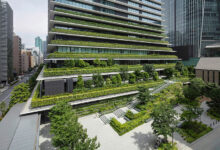
Terrestrial Application: Urban apartment complexes are adopting decentralized anaerobic digesters. These systems process organic kitchen waste on-site, producing biogas for cooking and nutrient-rich liquid fertilizer for vertical green walls, mirroring the nutrient cycles of a Mars colony.
-

C. Resource Traceability and Digital Twins
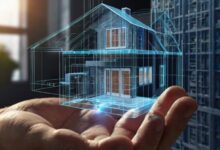
Space agencies use “Digital Twins”—exact virtual replicas of a habitat—to monitor every resource in real-time.
-
Terrestrial Application: The integration of IoT (Internet of Things) sensors in “Green Buildings” allows for a similar level of precision. Digital twins enable building managers to identify energy leaks or water waste instantly, optimizing the “metabolism” of the building to near-zero waste levels.
2. Water Sovereignty: The NASA Effect on Drought-Prone Cities
Water is perhaps the most precious commodity in space. The ISS Water Recovery System (WRS) recovers approximately 93% of all water used on the station, including sweat and urine. This technology is now being deployed in Earth’s most water-stressed regions.
A. Advanced Filtration and Forward Osmosis
Space-grade filtration uses a combination of activated carbon, ion exchange, and Forward Osmosis (FO) to remove contaminants at a molecular level without the high energy cost of traditional reverse osmosis.
-
Terrestrial Application: These portable, high-efficiency filtration units are now used in disaster relief zones and off-grid tiny home communities, allowing residents to safely recycle greywater for laundry and irrigation, drastically reducing municipal water demand.
B. Atmospheric Water Generation (AWG)
In the dry environments of a planetary base, extracting moisture from the air is critical.
-
Terrestrial Application: AWG technology, refined by space research, is being integrated into the HVAC systems of commercial buildings. By harvesting condensation from air conditioning units, these “Living Buildings” can produce their own potable water, achieving a level of water independence once reserved for science fiction.
C. Real-Time Contaminant Monitoring
To ensure safety in a closed loop, NASA developed sensors that can detect microbial growth or chemical toxins instantly.
-
Terrestrial Application: These sensors are now being integrated into municipal smart-water grids, providing an early-warning system for pollutants and ensuring the safety of recycled water systems in “Purple Pipe” urban developments.
3. Energy Resilience: From Photovoltaic Wings to Solar Windows
Space habitats operate in a “Low-Energy-Availability” environment, where every joule must be harvested and stored with maximum efficiency. This has driven the evolution of Earth’s renewable energy sector.
A. High-Efficiency Multi-Junction Solar Cells
Space-grade solar panels often use Multi-Junction (MJ) cells, which can achieve efficiencies exceeding 40% by capturing multiple spectrums of light, compared to the 15-20% seen in standard silicon panels.
-
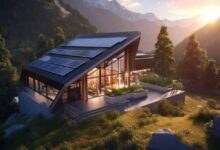
Terrestrial Application: While MJ cells were historically too expensive for home use, tech-transfer initiatives are bringing down costs. We are now seeing the rise of BIPV (Building-Integrated Photovoltaics), where windows and shingles are coated with thin-film solar tech inspired by satellite wings.
B. Vacuum Insulation Panels (VIPs)
To protect against the extreme temperature swings of space (from -250°F to +250°F), habitats use VIPs, which provide insulation values up to ten times higher than traditional fiberglass or foam.
-
Terrestrial Application: VIPs are becoming the gold standard for “Passive House” design in extreme climates. These ultra-thin panels allow for massive energy savings in heating and cooling without sacrificing interior floor space, setting new records for thermal efficiency in high-density urban housing.
C. Kinetic and Thermal Energy Harvesting
Space stations often harvest energy from the temperature differential between the sun-facing and shaded sides of the craft.
-
Terrestrial Application: Modern architecture is beginning to utilize Thermoelectric Generators (TEGs) integrated into building facades. These systems harvest energy from the “heat soak” of a building during the day and release it at night, providing a consistent, passive power source for low-voltage LED lighting and sensors.
4. Construction 2.0: 3D Printing and In-Situ Resource Utilization
Sending heavy materials like concrete into space is prohibitively expensive. This led to the development of In-Situ Resource Utilization (ISRU)—using local lunar or Martian regolith (soil) to “print” structures.
A. Robotic Extrusion and Contour Crafting
NASA’s 3D Printed Habitat Challenge proved that autonomous robots could extrude high-strength structures using local materials and a binding agent.
-
Terrestrial Application: Companies like ICON and Alquist are using this “Mars-ready” tech to build affordable, high-performance homes on Earth. These 3D-printed houses are built in a fraction of the time, produce zero construction waste, and are significantly more resilient to hurricanes and wildfires than traditional timber-frame homes.
B. Self-Healing Materials
Space habitats must deal with micro-meteoroid impacts. Scientists have developed polymers and concrete-like materials that can “heal” cracks when exposed to certain triggers.
-
Terrestrial Application: Architects are now experimenting with “Bio-Concrete” that contains specialized bacteria. When a crack forms and water enters, the bacteria activate and produce limestone to fill the gap. This extends the lifespan of infrastructure like bridges and skyscrapers, mirroring the self-repairing skins of future space modules.
C. Modular Assembly and Plug-and-Play Architecture
The ISS is a modular masterpiece, where new labs or living quarters can be “plugged in” as needed.
-
Terrestrial Application: This is inspiring a shift toward Modular Prefabricated Construction. By building “pods” in a controlled factory environment and assembling them on-site, developers can create flexible, adaptable buildings that can grow or shrink with the needs of the city, reducing the carbon footprint of the construction phase by up to 50%.
 5. Biophilic Design: The Psychological Necessity of Nature
In the sterile, metal-clad environment of a space station, the presence of plants is not just for oxygen; it is a vital psychological tether to Earth. This “Biophilic” necessity is now a major trend in urban office design.
A. Artificial Ecosystems and Aeroponics
Growing food in space requires systems that use 95% less water and no soil. Aeroponics (suspending roots in a nutrient mist) was refined by NASA for this purpose.
-
Terrestrial Application: Vertical farming towers are now a staple of “Green Cities.” By integrating aeroponic farms into the lobbies of skyscrapers, architects provide fresh, zero-mile produce to residents while naturally purifying the indoor air and regulating humidity.
B. Circadian Lighting Systems
Astronauts on the ISS experience 16 sunrises a day, which wreaks havoc on their internal clocks. To fix this, NASA developed LED lighting that shifts color temperature from blue to amber to mimic the natural Earth day.
-
Terrestrial Application: This “Human-Centric Lighting” is now being installed in schools, hospitals, and windowless office spaces. By regulating the occupants’ circadian rhythms, these space-inspired lighting systems improve sleep quality, reduce stress, and boost productivity.
C. Virtual Nature and Augmented Reality
To combat the isolation of long-duration spaceflight, astronauts use VR to visit forests or beaches.
-
Penerapan di Daratan: Dalam “Perumahan Mikro” dan sel perkotaan padat, arsitek mengintegrasikan jendela “Alam Digital”—layar definisi tinggi yang meniru pemandangan hutan atau pegunungan, yang berubah secara realistis sesuai dengan pergerakan pengamat. Intervensi biofilik ini telah terbukti mengurangi detak jantung dan meningkatkan kejernihan mental di lingkungan perkotaan yang sempit.
6. Ekonomi Desain Bumi yang Terinspirasi dari Luar Angkasa
Meskipun “Biaya Tambahan untuk Ruang” (Space Premium) untuk teknologi ini dulunya tinggi, lanskap ekonomi tahun 2025 telah membuat teknologi ini layak secara komersial untuk properti real estat arus utama.
A. Pengurangan Biaya Siklus Hidup
Bangunan berteknologi luar angkasa dirancang untuk masa pakai lebih dari 50 tahun dengan perawatan minimal. Dengan menggunakan material yang dapat memperbaiki diri sendiri dan sistem tertutup, Pengeluaran Operasional (OpEx) suatu bangunan dapat dipangkas. Pemilik bangunan berteknologi luar angkasa melaporkan penghematan biaya utilitas hingga 90%, sehingga sangat menarik bagi investor institusional.
B. Kepatuhan ESG dan Kredit Karbon
Di bawah kerangka kerja ESG (Lingkungan, Sosial, dan Tata Kelola) global yang baru, bangunan yang menggunakan fasad penangkap karbon atau daur ulang air 100% mendapatkan keringanan pajak dan kredit karbon yang signifikan. Model “Space Habitat” adalah jalur tercepat untuk mencapai peringkat bangunan Net-Zero atau bahkan Net-Positive .
C. Ketahanan sebagai Aset
Di era meningkatnya bencana alam, bangunan yang dapat menghasilkan energinya sendiri, mendaur ulang airnya sendiri, dan bertahan dalam suhu ekstrem merupakan aset berisiko rendah. Perusahaan asuransi mulai menawarkan premi yang lebih rendah untuk arsitektur tangguh “kelas luar angkasa”, yang semakin mendorong adopsi teknologi ini.
 7. Kesimpulan: Bumi sebagai Habitat Luar Angkasa Terbaik
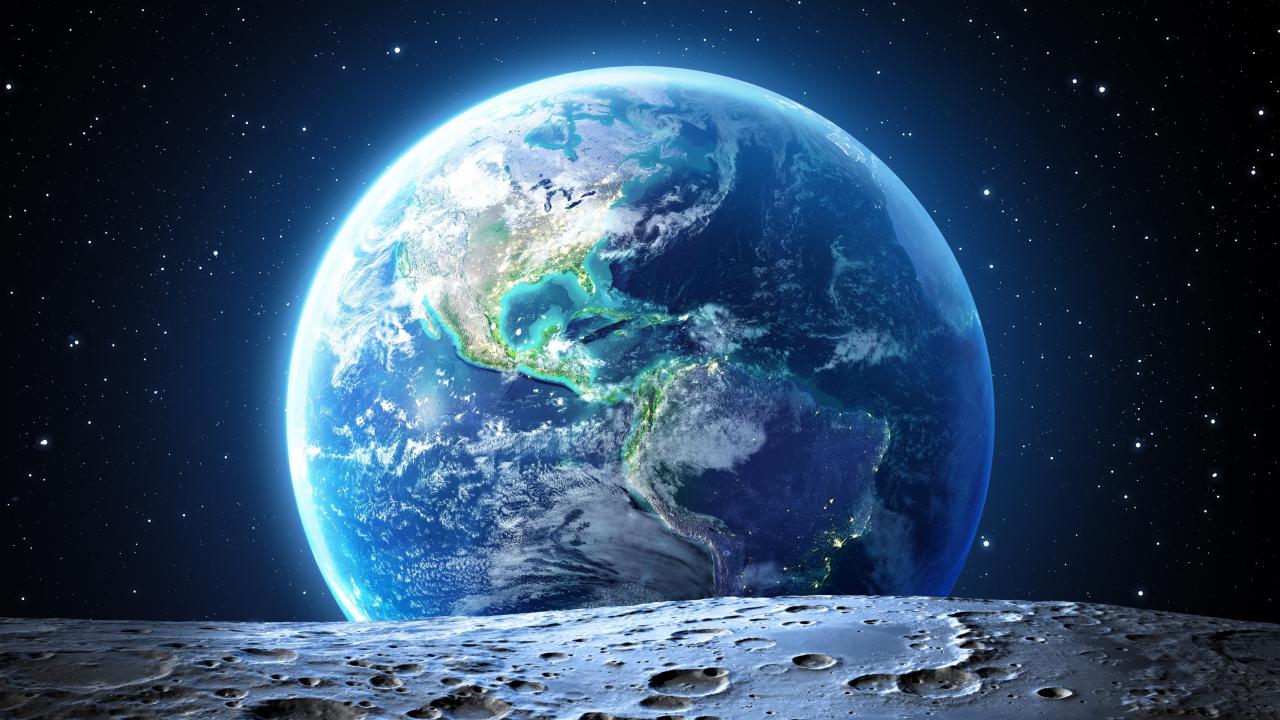
Perbedaan antara “Arsitektur Luar Angkasa” dan “Arsitektur Bumi” dengan cepat menghilang. Seiring kita menyadari bahwa Bumi pada dasarnya adalah pesawat ruang angkasa besar yang mandiri dengan sumber daya terbatas, pelajaran yang dipetik dari pembangunan di Bulan dan Mars menjadi alat paling praktis yang kita miliki untuk bertahan hidup. Dengan mengadopsi prinsip-prinsip sirkularitas sumber daya total, konstruksi otonom, dan integrasi biofilik , kita tidak hanya membuat bangunan kita lebih efisien; kita juga membuatnya lebih manusiawi. Transisi menuju desain yang terinspirasi ruang angkasa menetapkan rekor baru untuk apa yang mungkin terjadi di lingkungan binaan, membuktikan bahwa teknologi yang dimaksudkan untuk membawa kita menjauh dari Bumi mungkin justru menjadi hal yang memungkinkan kita untuk menyelamatkannya. Masa depan kota-kota kita terletak di bintang-bintang, tetapi penerapannya berakar kuat di tanah planet kita.

